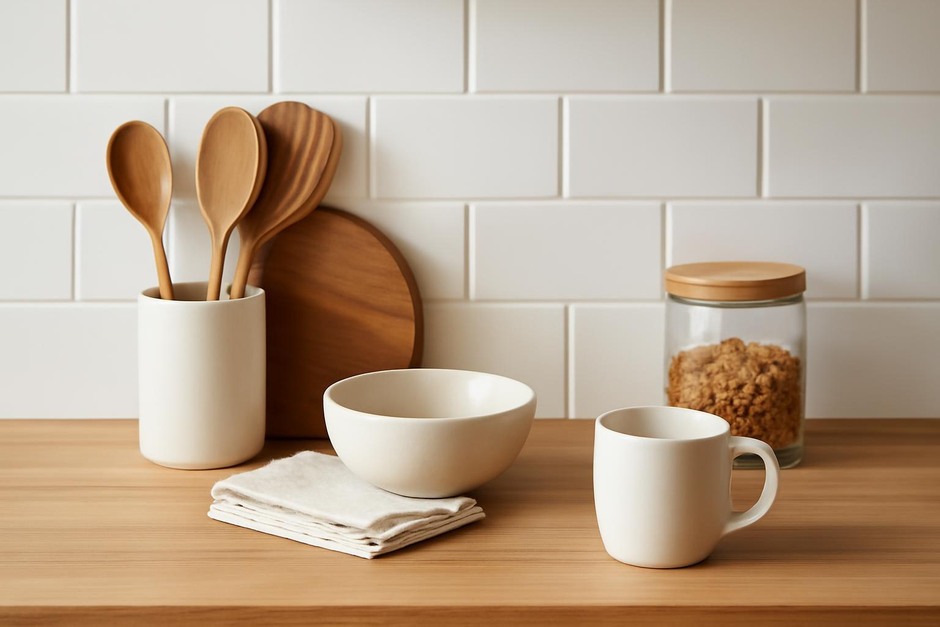
Surfaces are workspaces. When they become default storage, they stop serving their purpose and make a home feel chaotic. This article identifies the common mistakes that create persistent surface clutter, lays out a few steady principles to reverse the pattern, shows how those principles look in three everyday places, and ends with a short checklist you can use as a daily reset.
Problem
The common problem is simple: a horizontal surface is convenient, so it becomes a catchall. Keys, mail, grocery bags, dishes, devices, and half-started projects gather until the surface no longer functions for its intended use. That drift happens for a few reasons:
- We overestimate how often free surfaces will be tidied.
- There is no dedicated spot for an item, so the surface wins by default.
- Decision fatigue leads us to postpone sorting—so the surface becomes invisible background clutter.
These dynamics make cleanup feel overwhelming, so the pattern repeats. The goal isn’t perfection; it’s to reduce friction so surfaces are useful most of the time.
Principles
Keep the approach practical and forgiving. Apply these principles consistently and the surfaces will follow.
- Define roles: Every surface should have a primary purpose (prep food, incoming mail, landing for keys). Keep items related to that purpose only.
- Limit capacity: Make the surface feel full sooner by using a tray, basket, or small decorative box. When the container is full, you must sort.
- Create one-touch decisions: Choose actions you can do immediately—file, recycle, put away—so items don’t linger in limbo.
- Schedule short resets: Five minutes at consistent moments (arrival home, after dinner, before bedtime) prevents accumulation.
- Use visible storage: When an item must be kept nearby, store it in an attractive, visible container so it appears intentional rather than accidental.
- Make consequences noticeable: If a surface being cluttered interferes with a daily task, you’ll be more motivated to keep it clear. Design the layout so clutter creates small, obvious friction.
Examples
Entryway Table
Common mistake: Leaving keys, loose mail, random receipts, and shopping totes on the table until they form a pile.
Correction: Define three real zones—one shallow tray for keys and coins, a small magazine holder or wall pocket for mail that requires attention, and a hook or bin for bags. Make the tray and holder small enough that they force a decision: if the mail doesn’t fit, open it and file or recycle.
Kitchen Counter
Common mistake: Turning a stretch of counter into a staging area for everything—appliances, takeout containers, mail, and produce—so there’s no clear workspace for cooking.
Correction: Reserve a dedicated prep zone. Move rarely used appliances to a cabinet or shelf. Keep a bowl for fruit at one end and a small basket for inbound mail near the edge, but set physical limits: a single basket and one appliance per 18 inches of counter. Do a five-minute sweep after dinner: dishes away, trash cleared, mail sorted.
Living Room Coffee Table
Common mistake: Letting cups, remotes, magazines, and charging cables create a layered, uneven landscape that makes the table feel messy even when the room is tidy.
Correction: Use a small tray to corral remotes and a closed box for small items. Keep reading material to a narrow stack and adopt the rule: anything added must replace something or be put away at the next reset. Cables should have a simple docking spot on a side table or in a drawer; visible cords invite visual clutter.
Practice Checklist
Use this concise checklist as a daily micro-habit to keep surfaces useful. It should take five minutes or less.
- Scan each primary surface (entry, kitchen counter, coffee table).
- For each item not belonging to that surface, do one of three one-touch actions: put away, file/recycle, or schedule (write a short note and place in an action tray).
- If a container on the surface is overflowing, empty and sort it immediately.
- Limit visible items to the surface’s defined role—remove extras.
- Close drawers or cupboards used during the reset so the area looks intentional.
- Make a quick note of anything that repeatedly returns to the wrong spot and assign it a permanent home.
- Set a gentle alarm or routine trigger (arrival home, after dinner) to repeat this five-minute reset daily.
Small, consistent actions replace the cycle of overwhelm. A surface that is clear most of the time doesn’t need a dramatic deep clean—just a steady habit of making quick, one-touch decisions. Try the checklist for a week and notice how much clearer your living spaces feel.