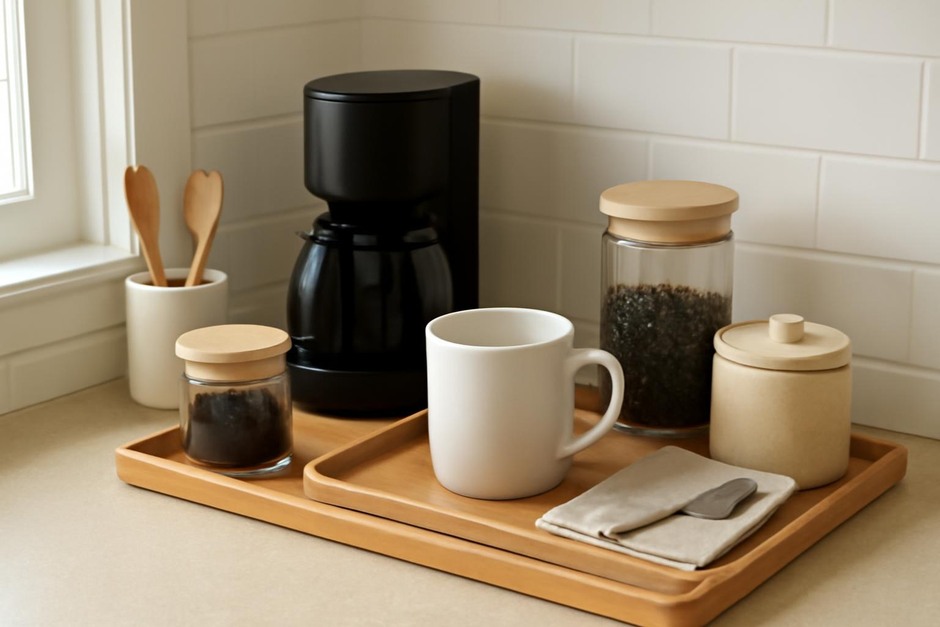
Keeping a small coffee-and-tea station pleasant and functional is mostly about a few short habits repeated daily. The aim here is not a one-off deep clean but a calm five- to ten-minute reset that reduces friction in the morning and prevents mess from building up.
Step-by-step method
-
Start with cleared counter space.
Remove yesterday’s cups, used filters, and any incidental clutter. Common mistake: leaving mugs or tea bags on the counter “just for a minute”—they multiply quickly. Correction: keep a small dish rack or designated mug area nearby and put cups there immediately.
-
Wipe the work surface and tray.
Use a damp cloth to remove grounds, sugar crystals, and water rings. For stubborn coffee stains, a short circular scrub with a mild detergent will do. Common mistake: ignoring sticky spots until they harden. Correction: a quick wipe now avoids a longer scrub later.
-
Empty the coffee grounds and tea leaves.
Compost grounds or discard them in the bin; shake loose tea leaves into the trash. Common mistake: letting grounds sit in the brewer or portafilter overnight. Correction: empty immediately after brewing to prevent stale odors and clogging.
-
Rinse or replace single-use items.
Rinse a pour-over cone or reusable filter. Replace disposable filters and single-use tea bags that were left out. Common mistake: reusing paper filters or wet tea bags. Correction: always replace disposable items—it’s quicker and prevents off-flavors.
-
Check and restock essentials.
Top up coffee beans, tea tins, sweeteners, milk (or milk substitute), and filters. Keep a small measuring scoop in the container. Common mistake: running out of essentials at the wrong time. Correction: keep a visible low-stock cue (a sticky note or a half-full container).
-
Quick-clean appliances.
Wipe the exterior of the kettle, grinder, or machine and empty any drip trays. Common mistake: ignoring the drip tray until it overflows. Correction: make emptying drip trays part of the daily reset.
-
Re-arrange for flow.
Place frequently used items within easy reach: cups near the machine, spoons in a small jar, sugar and sweeteners grouped together. Common mistake: scattering essentials. Correction: use a small tray or low-profile basket to create an intentional zone.
-
Final check: smell and sight.
Take a breath—if anything smells off or looks sticky, deal with it now. A quick visual scan prevents nagging chores later.
Variations
Minimalist single-cup setup
- Keep only the essentials: one travel mug or cup, a small jar of grounds, and a kettle. Use a folding tray to tuck away supplies when not in use.
- Variation tip: store extra items in a shallow drawer and restock daily from that drawer so the counter remains uncluttered.
Shared household station
- Divide the station into zones: coffee, tea, and milk. Label containers or use color-coded scoops so everyone follows the same system.
- Variation tip: keep a communal weekly checklist near the station for refilling bulk items (beans, tea, filters).
Tea-focused or specialty setup
- Dedicate a small box or tiered stand for leaf tea tins and infusers. Keep an extra pot or kettle available for people who prefer loose leaf steeping.
- Variation tip: rotate tins to use older tea first—place the newest at the back.
Troubleshooting
-
Problem: Counter always looks cluttered.
Fix: Remove nonessential items. Use a single tray to contain the zone and limit the number of visible containers to three: a cup holder, a grounds/beans container, and a utensils jar.
-
Problem: Coffee tastes stale or flat.
Fix: Check the roast date and storage. Transfer beans to an opaque, airtight container and measure only the amount you’ll use in a week.
-
Problem: Sticky sugar or syrup spills.
Fix: Keep syrups and sugary items in a shallow tray and wipe spills immediately. Consider using squeeze bottles with narrow nozzles to reduce drips.
-
Problem: Mineral buildup in kettle or machine.
Fix: Descale regularly according to your appliance’s instructions or with a mild vinegar solution. A short weekly rinse will slow buildup.
-
Problem: Children or pets accessing hot items.
Fix: Position the station away from edges and keep kettles and machines unplugged when not in use. Store mugs on higher shelves if needed.
With a short, reliable reset each day the beverage corner becomes a quiet, dependable part of the kitchen rather than a source of little tasks. Try the method for a week, note the most common recurring issue, and adapt the variations to fit your space—small changes add up quickly.