Problem
One small drawer often becomes a catchall: rubber bands, spare keys, unreadable receipts, batteries, random screws, and a scattering of single socks. Over time it’s not just messy—it’s a tiny inefficiency that interrupts small tasks and quietly eats a few minutes from each day. Common reactions are either to ignore it until it overflows or to empty it into boxes elsewhere, which shifts rather than solves the habit.
Principles
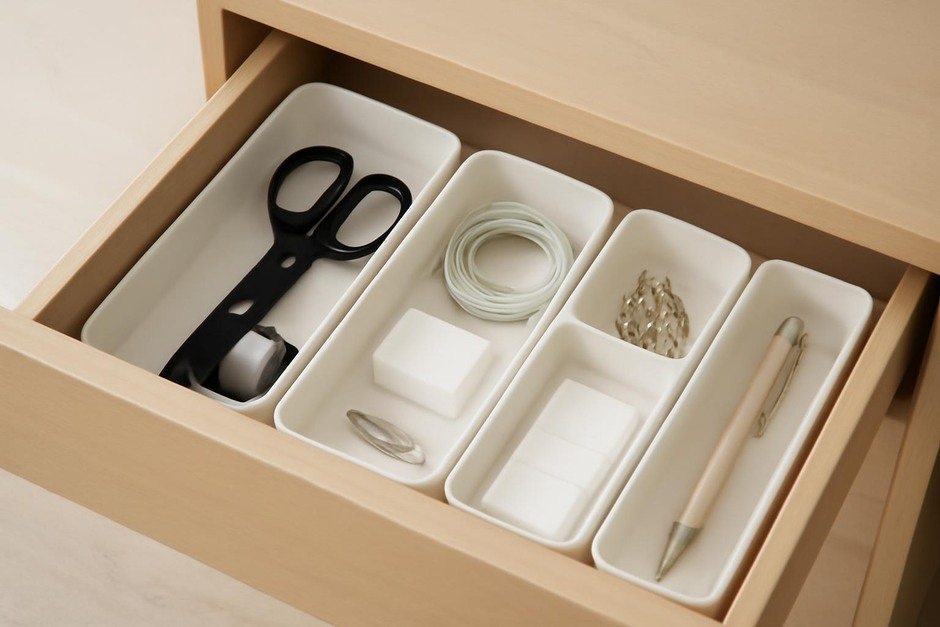
- Containment: Keep like items together using small trays, boxes, or partitions. Containment prevents re-mixing and makes things visible at a glance.
- Visibility: Prefer shallow compartments and low piles. If you can’t see it, you’ll forget it exists.
- Curation: Limit what belongs in the drawer. Not everything compact should go there—pick a clear, short list of categories that belong.
- Thresholds: Set simple decision rules. For example: one extra set of keys per person, three working pens total, no expired batteries.
- Frequency: Small, regular tidy sessions beat occasional deep cleans. A one-minute tidy each day and a ten-minute weekly review prevent pileups.
- One-touch decisions: When you pick an item up, decide immediately: keep, relocate, recycle, or trash. Delaying multiplies the work.
Examples
Below are a few typical drawer types and calm corrections that fit into everyday routines.
Small Kitchen Junk Drawer
- Problem: A deep drawer full of tape, spare screws, takeout gift cards, and oddly shaped utensils.
- Correction: Use a shallow tray with 3–5 compartments. Keep only commonly used items: scissors, tape, a pen, a notepad, and a single screwdriver. Move odd utensils to the utensil drawer or a kitchen tool container.
Desktop Drawer
- Problem: Pens, sticky notes, chargers, and a pile of miscellaneous paperclips and receipts.
- Correction: Assign one compartment for writing tools (limit to three), one for chargers and cords (wrap each with a soft twist tie), and a small tin for loose metal bits. Recycle receipts monthly; keep only those tied to expenses you track.
Electronics and Batteries Drawer
- Problem: Mixed battery sizes, broken headphones, and orphaned chargers.
- Correction: Use labeled small zip pouches for each battery type. Keep one pouch for active chargers, one for backup chargers to store in a travel kit, and a small container for broken items to dispose of properly at the next electronics drop-off.
Entry or Key Drawer
- Problem: Many keys, old fobs, and unidentified keychains.
- Correction: Limit to daily essentials: house key, car key, and one spare. Photograph and label any essential but rarely used keys and store them in a small labeled envelope elsewhere.
Concise Practice Checklist
- Set a 20–30 minute timer and empty the drawer onto a clean surface.
- Sort into five piles: Keep (daily), Keep (infrequent but necessary), Relocate, Recycle, Trash.
- Apply thresholds: Limit counts (e.g., three pens, one extra key, two flashlights). If it exceeds the threshold, decide which to move or discard.
- Contain: Place items into shallow trays, small boxes, or labeled pouches by category.
- Assign homes: Anything not on the “keep” list gets a specific new spot elsewhere in the home within easy reach of where it is used.
- Daily 60-second tidy: Quickly straighten compartments and remove newly accumulated trash.
- Weekly 10-minute review: Reassess one or two items that linger in the “infrequent” compartment; relocate or let go.
- Quarterly deep check: Re-evaluate thresholds and replace worn organizers if needed.
Turn the junk drawer into a practical, predictable corner of your home by combining containment, clear rules, and brief maintenance. The goal isn’t perfection; it’s to make small daily choices simpler and to take a little time back from the tiny interruptions that accumulate across a week.